<< Back
How to Make a Salad That’s Filling (and Tasty)
January 23, 2026
You start with the best intentions: a big bowl of greens, maybe some cucumbers or tomatoes, and a drizzle of dressing. But 30 minutes later? You’re hungry again.
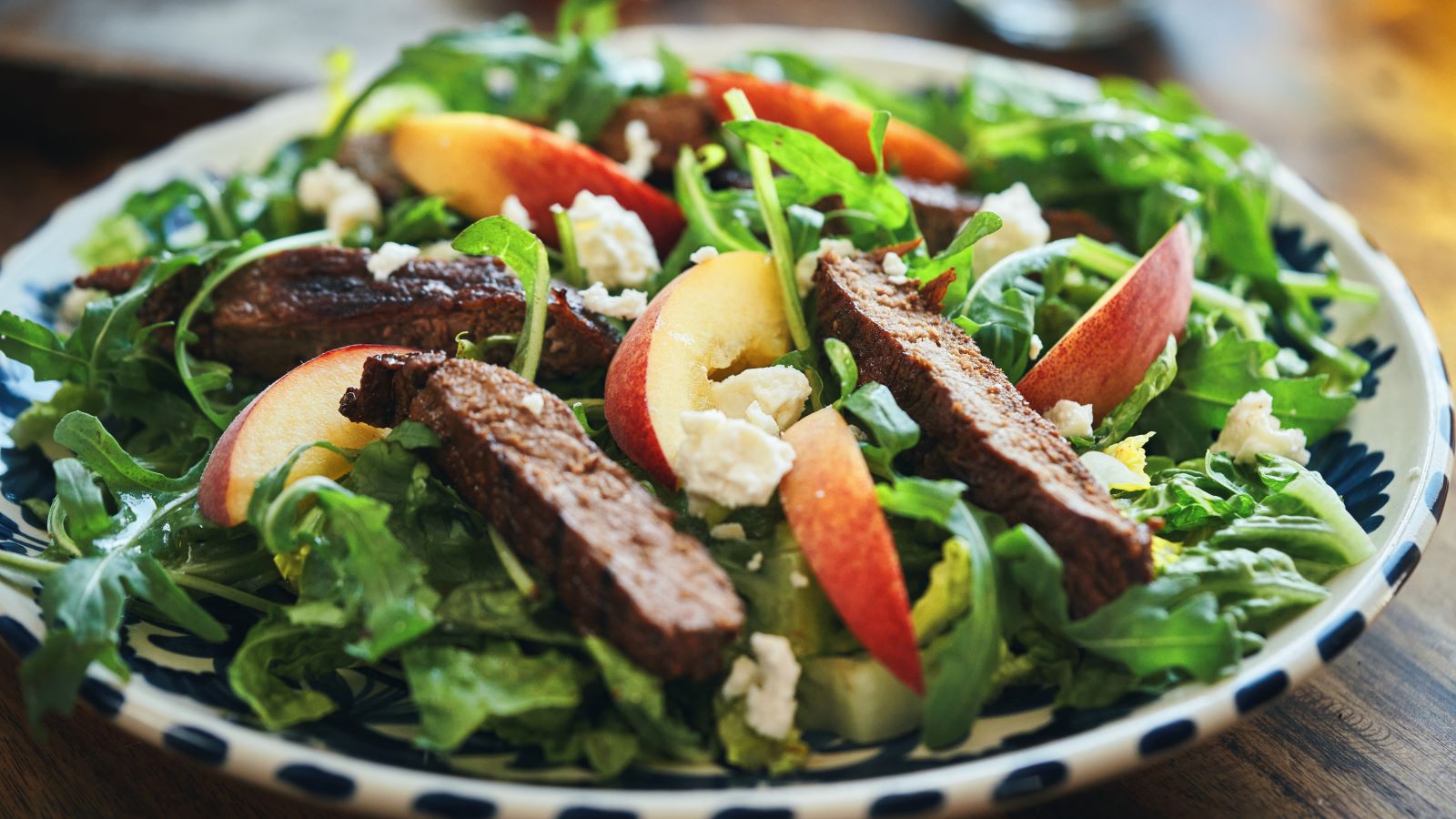
But salads don’t have to leave you feeling unsatisfied. With a few simple tweaks, you can turn any salad into a hearty, balanced meal.
“Salads should be more than just lettuce and dressing,” says Hayley Merrill, PA-C, physician assistant with Hartford HealthCare Medical Group. “When you add the right mix of protein, fiber and healthy fats, they become a complete meal.”
Here’s how to upgrade your next salad.
1. Add protein
If your salad is just greens, you’re missing the most important part of feeling full: protein.
“Protein helps stabilize blood sugar and keeps you satisfied for hours,” says Merrill. “Chicken, fish, beans, tofu or even a hard-boiled egg can completely change how filling a salad feels.”
Aim for at least one good protein source, and you’ll notice the difference right away.
> Related: 7 Protein-Packed Foods to Add to Your Diet
2. Don’t skip the carbs
Carbs often get a bad reputation, but they’re an essential part of a balanced plate.
“Whole grains like quinoa, farro or brown rice add staying power to your salad,” Merrill notes. “They provide fiber and slow-digesting energy that keeps you from crashing later.”
If grains aren’t for you, roasted sweet potatoes or a scoop of beans can round things out.
> Related: The 8 Best Vegetables for Your Health
3. Mix in healthy fats
It might sound taboo, but a little fat goes a long way in keeping hunger at bay – and boosting flavor.
“Avocado, nuts, seeds and olive oil-based dressings are all great options,” says Merrill. “They also help your body absorb fat-soluble vitamins from the vegetables.”
Think of them as the finishing touch that makes your salad feel like a meal, not just a side dish.
4. Load up on fiber
Fiber is the quiet hero of satiety.
“Vegetables, fruits, beans and whole grains all provide fiber, which slows digestion and makes you feel full longer,” Merrill says.
Instead of iceberg lettuce, go for dark leafy greens or crunchy additions like carrots, broccoli or chickpeas to bulk up the fiber.
> Related: The Surprising Amount of Fiber You Actually Need
5. Play with texture and flavor
Part of feeling satisfied is enjoying what you’re eating.
“When a salad has different textures — crunchy nuts, creamy avocado, chewy grains — it keeps your palate interested,” says Merrill.
Adding spices, fresh herbs or a tangy vinaigrette can also elevate your meal.
> Related: Nutrition Smack Down: Healthiest Nuts
6. Watch the dressing
Here’s where things can go wrong fast.
“Some dressings are packed with sugar, sodium and saturated fat,” says Merrill. “They can turn a healthy salad into the equivalent of fast food.”
The solution: use olive oil and vinegar, or look for lighter options. You’ll still get flavor without undoing all your healthy add-ins.
> Related: These Are the 4 Healthiest Salad Dressings
Turn your salad into a meal
A salad doesn’t have to be rabbit food. With the right mix of protein, carbs, healthy fats and fiber, your salad can be a filling, balanced meal that keeps you energized.
“Think of your salad as a plate in a bowl,” says Merrill. “When you include all the food groups, you’ll never walk away hungry.”